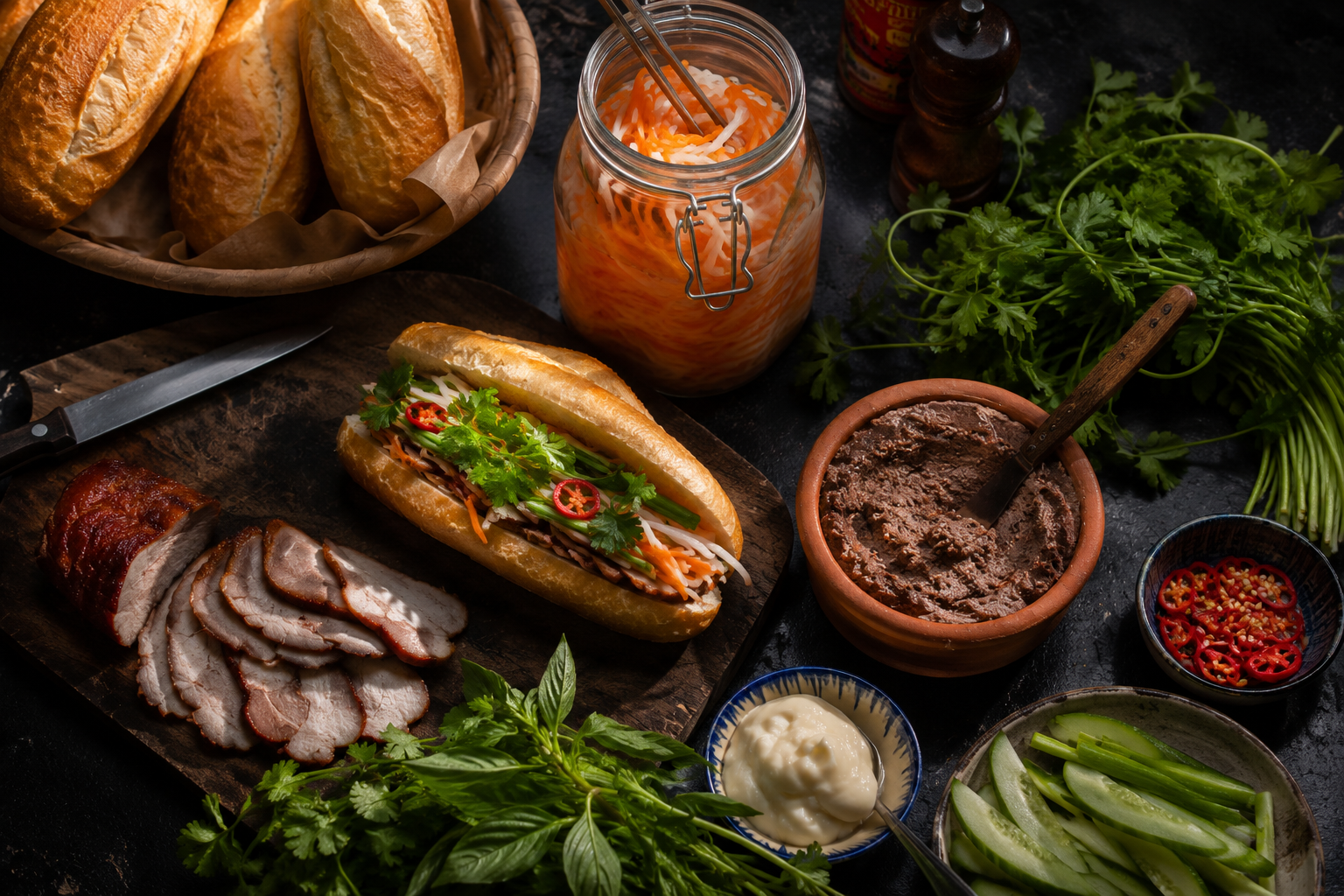
Let's be honest upfront: making a great bánh mì at home is a proper two-day project. The do chua needs at least overnight. The protein wants a long marinade. The pâté, if you're making it from scratch, takes the better part of a morning. The bread (real Vietnamese bread) needs rice flour and a hot oven and some luck.
We're going to walk you through all of it. Because understanding what goes into a proper bánh mì will make you appreciate one ten times more when you eat it. And because after you do it once, you will deeply respect anyone who does it every single day. (This is actually why we started the shop. Not joking.)
Not sure what makes a bánh mì great to begin with? Start with the full story before you start cooking.
Component 1: The Do Chua (Pickled Daikon and Carrot)
Start here. Start here yesterday, actually. Do chua needs time. This is not one of those "it'll be fine" situations. Under-pickled do chua is why bad bánh mì tastes flat. It's also the first thing we check when we're evaluating a shop.
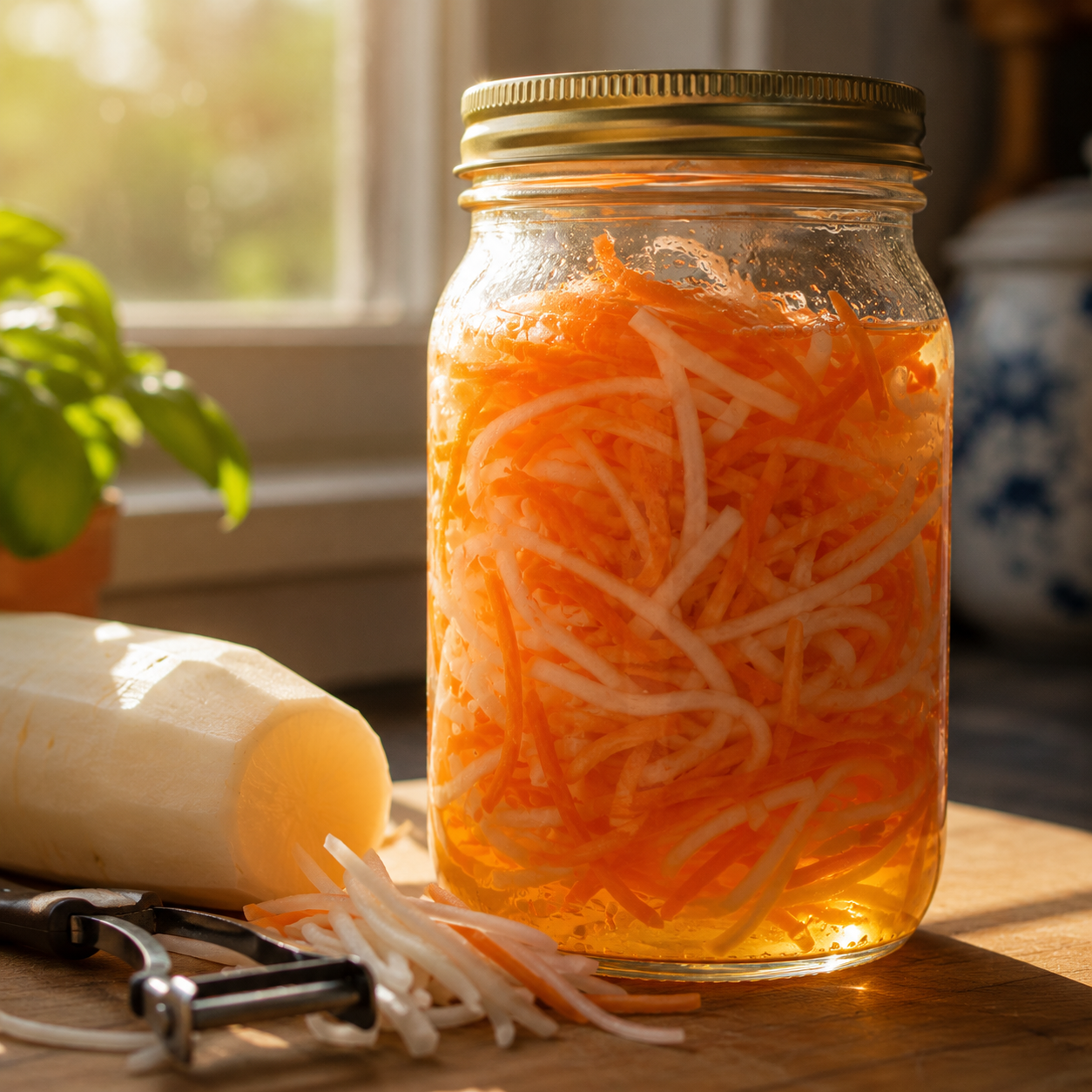
Do Chua: Pickled Daikon and Carrot
- 200g daikon radish (also known as white radish), peeled and julienned
- 100g carrot, peeled and julienned
- 1 tsp salt
- 2 tbsp white sugar
- ½ cup rice wine vinegar
- ½ cup warm water
Method:
- Toss julienned vegetables with salt. Leave 10 minutes, squeeze out liquid. This removes bitterness from the daikon.
- Dissolve sugar in warm water. Add rice vinegar. Taste it. Should be sharp, bright, and slightly sweet.
- Pack vegetables into a jar, pour brine over. Cool completely, refrigerate. Use after 24 hours minimum. Better after 48. If they're pale and soft when you open the jar, they needed more time.
The do chua is doing three things at once: adding crunch, delivering sour, and cutting through the fat of the pâté and meat. If your bánh mì tastes flat or heavy, it's usually because the pickles are wrong. Don't use coleslaw. Don't use pickled red onion. Don't use "something similar." Do chua or nothing.
Component 2: Your Choice of Protein
The classic is char siu pork, that sticky lacquered BBQ meat you'll see hanging in the window of Vietnamese and Cantonese shops. It's brilliant in a bánh mì. Worth knowing: char siu leans more Chinese than Vietnamese in its roots. A proper Vietnamese shop might just as easily fill your roll with lemongrass chicken, five-spice pork belly, or house-made pork roll (chả lụa). Pick what you love and commit.
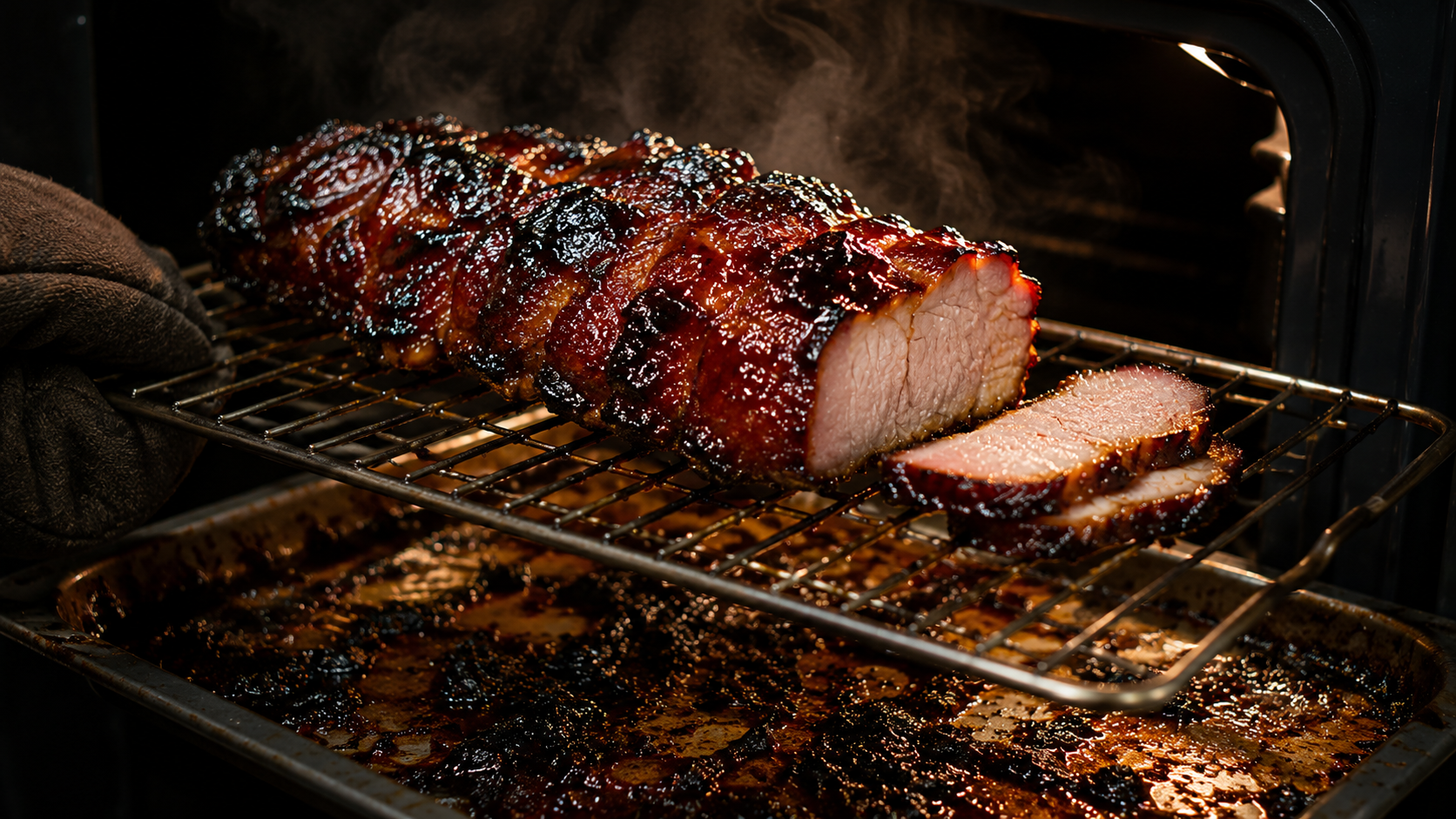
Char Siu: BBQ Pork (or use your protein of choice)
- 500g pork shoulder or pork neck, sliced into 3cm strips
- 3 tbsp hoisin sauce
- 2 tbsp honey
- 1 tbsp soy sauce
- 1 tsp five-spice powder
- 1 tsp sesame oil
- A few drops red food colouring (optional but traditional)
Method:
- Mix all marinade ingredients. Coat pork completely, refrigerate minimum 4 hours (overnight is better).
- Preheat oven to 220°C. Roast pork on a wire rack over a foil-lined tray for 20 minutes.
- Brush with extra marinade, roast another 10 minutes until caramelised and slightly charred at the edges.
- Rest 10 minutes before slicing thin. The edges should be almost black and sticky. That's not burnt. That's correct.
Component 3: The Pâté
This is where most home cooks tap out. Good news: you don't have to make pâté from scratch for a great bánh mì. A quality store-bought chicken liver pâté will do the job. What you cannot do is skip it, replace it with butter, or use "light" pâté. The pâté is the umami backbone of the whole sandwich. It is doing the heavy lifting. Do not leave it behind.
🫙 If you're making it from scratch: Cook 300g pork or chicken liver with onion, garlic, thyme, and a generous amount of butter until just cooked through. Blend smooth with 100g extra soft butter, season with salt, white pepper, and a splash of cognac. Press into ramekins, refrigerate overnight. Spread thick. Always thick. The people who spread it thin are the same people who say they "don't really like bánh mì."
Component 4: The Bread
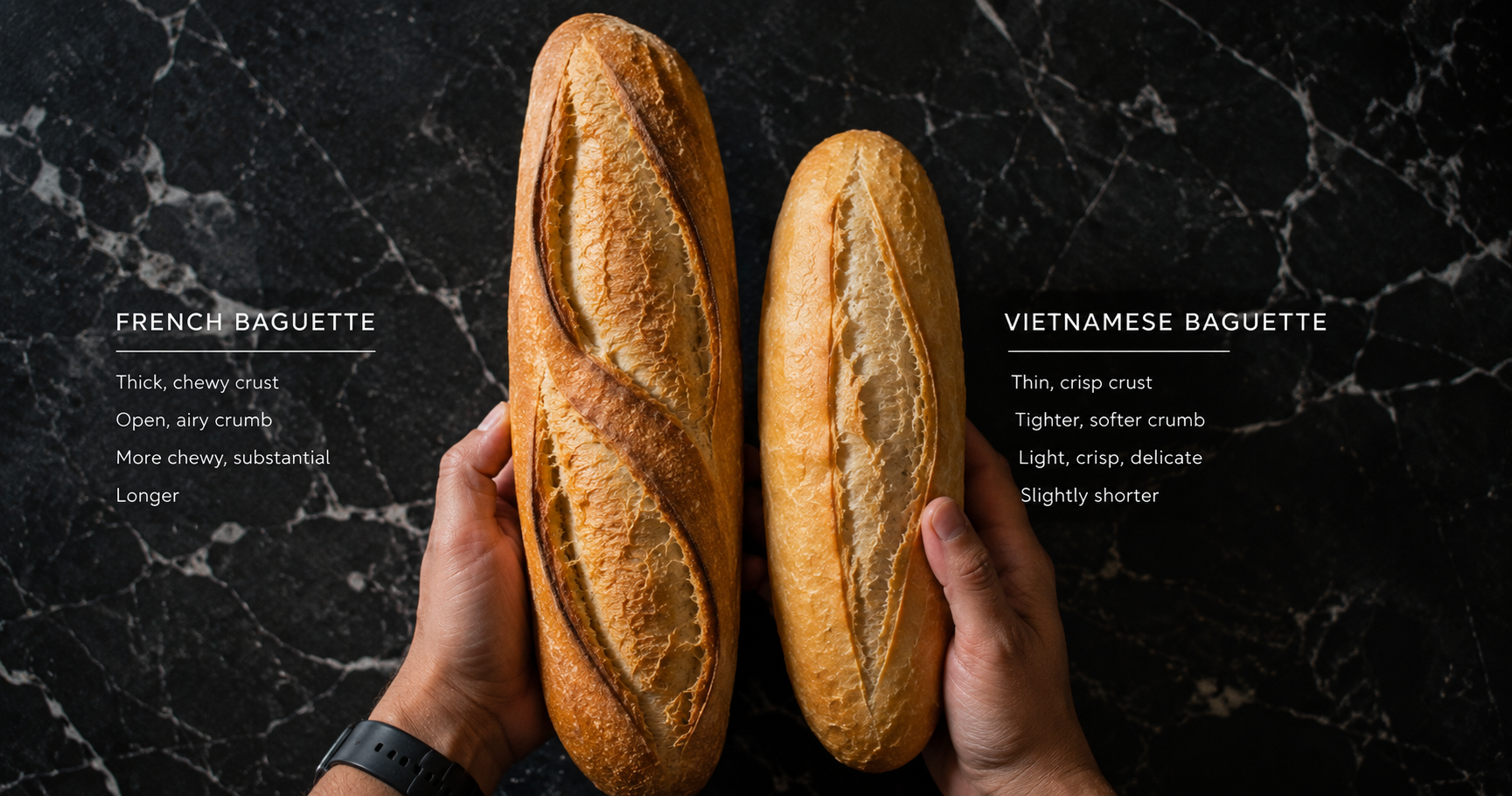
Here's the honest truth: making authentic Vietnamese bánh mì bread at home is hard. The rice flour-to-wheat ratio varies by baker and region. Getting the crust thin enough to shatter without the roll collapsing requires a very hot oven, steam injection, and experience. Most home ovens can't get there.
The best substitute? A fresh French baguette from a good bakery, bought that morning and used within two hours. Toast it cut-side down in a hot, dry pan for two minutes before assembling. It won't crack the same way. But it'll get close enough that you understand what you're aiming for.
Component 5: Assembly (Where It All Comes Together or Falls Apart)
The order matters. This is not decorating a sandwich. This is engineering a flavour sequence that hits umami, salt, sour, sweet and heat in every single bite. If you do it out of order, you'll notice.
A note on what you won't see in the photos: house-made mayo, fresh cucumber, shallots, and chilli. They didn't photograph the way we wanted them to, but don't skip them. The mayo ties pâté to protein. The cucumber gives you a cool, watery crunch between all that fat and acid. The shallots add a raw bite. The chilli is non-negotiable. These four are quiet but the sandwich is visibly worse without any of them.
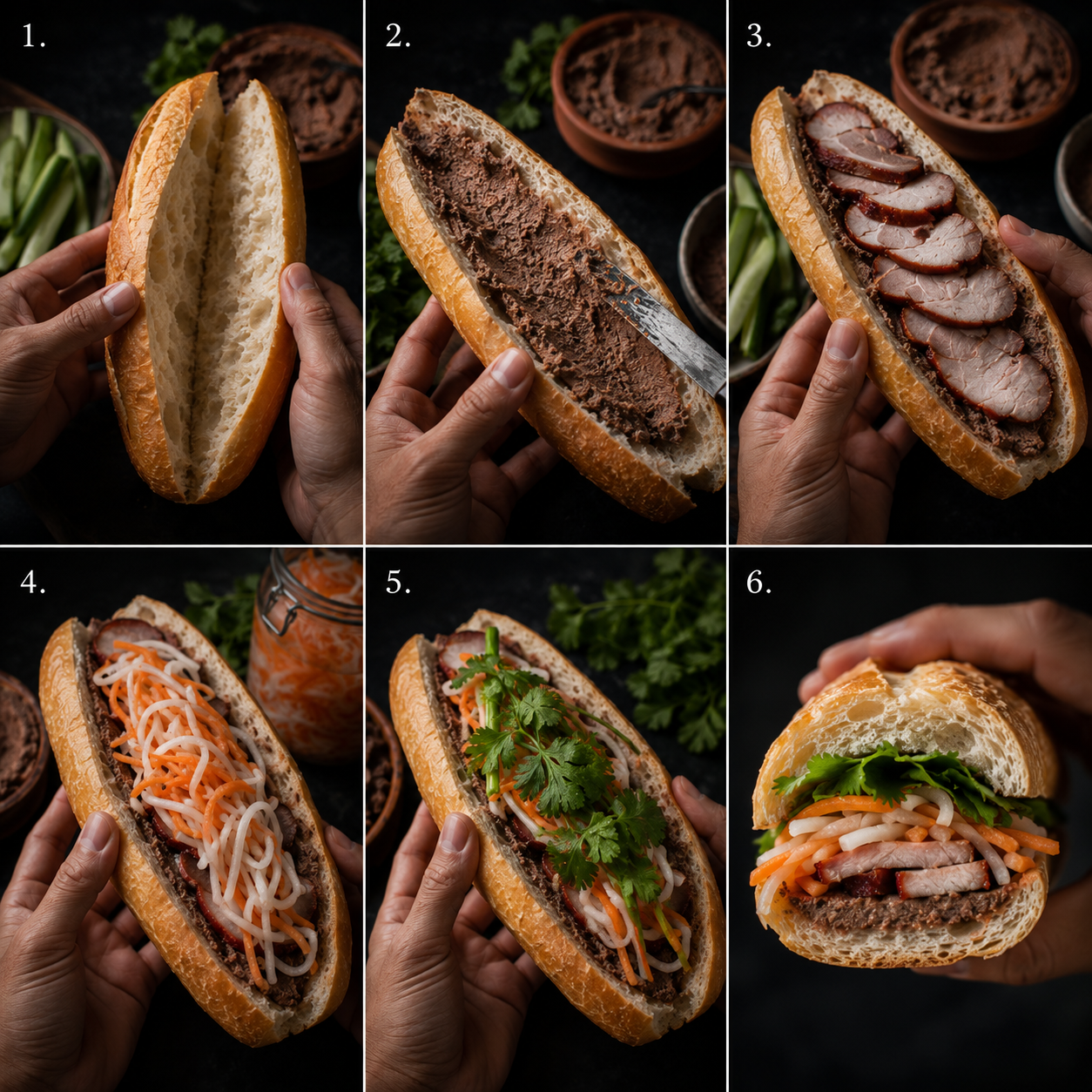
The Assembly: In Order, Every Time
- Split the baguette lengthways without cutting all the way through. Toast cut-side down in a hot dry pan for 2 minutes. The crust should crackle when you flex it.
- Spread pâté generously on both cut sides. All the way to the edges. Don't be shy.
- Spread mayo on top of the pâté.
- Add your protein.
- Pile in the do chua.
- Add cucumber batons, fresh coriander, spring onion, and shallots.
- Tuck in sliced fresh chilli.
- Finish with 3 to 4 drops of Maggi seasoning.
- Close it. Press gently. Eat immediately. Standing up is traditional and correct.
🥖 Why you'll probably stop making it at home: Not because it's hard. Because once you've made it properly, you understand exactly how much work goes into a great bánh mì. And then the idea of doing all of this every morning, for every customer, to the same standard, starts to make a lot of sense as a reason to open a shop.
While You're Here
The StoryThe full history of bánh mì, from 1954 Saigon to Sydney. Sydney GuideHow to spot a great bánh mì in Sydney. And when to walk away. TravelWe ate bánh mì every day in Vietnam. Here's why we came home and started a shop.Rather We Just Made It For You?
That's the whole point. We're opening in Sydney soon. House-made everything. Fresh bread baked all day. No shortcuts, ever.
Back to Home More StoriesSources: Wikipedia: Bánh mì · Andrea Nguyen, The Banh Mi Handbook (2014) · Do chua: traditional Vietnamese pickling method