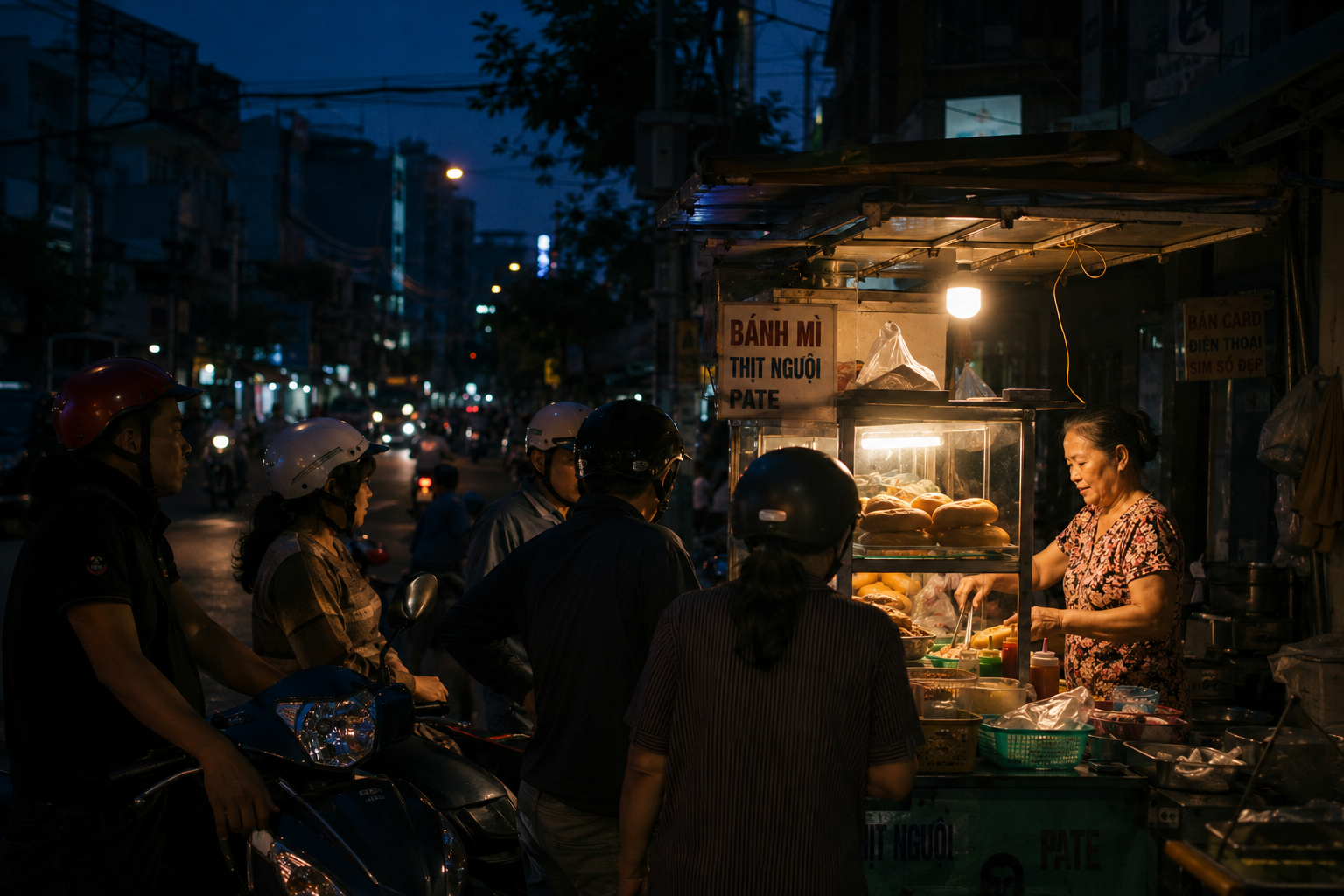
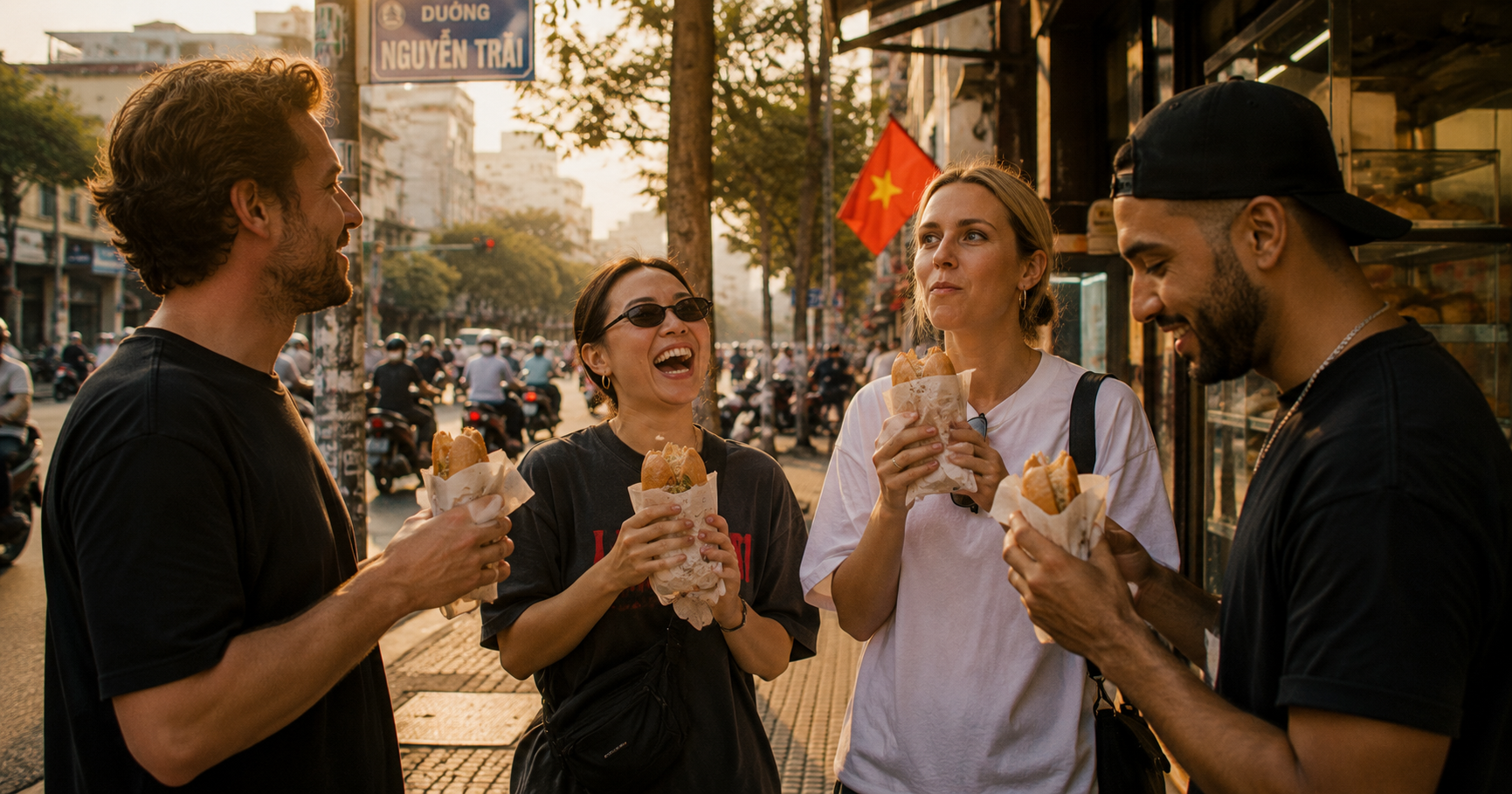
The first bánh mì I ate in Vietnam was at 6:30am on a footpath in District 1, Ho Chi Minh City, still in yesterday's clothes, jet-lagged beyond reason, from a cart run by a woman who clearly had no time for my inability to decide quickly.
I pointed at what looked popular. She built it in twelve seconds. It cost me the equivalent of $1.40 Australian. It was the best thing I had ever eaten.
I have since spent a great deal of time and money trying to understand why. (If you want the full history of what bánh mì actually is, we wrote that too.)
What Vietnam Understands That We Don't
Bánh mì in Vietnam is not a meal that requires a decision. It's not a café thing or a lunch thing or a treat. It's a 6am thing, a 10am thing, an after-school thing, a "I need something and I need it now" thing. It lives on the footpath. It's made in under a minute. It costs almost nothing. And it is, no irony, no exaggeration, a complete and perfect food.
The carts open before sunrise. The bread arrives still warm from a bakery down the street. The pâté is made in batches, the char siu is glazed and sliced fresh, the do chua was pickled the day before. By the time the city wakes up, everything is ready. There is no "soft launch." There is no "coming soon." At 6am, you're either open or you're not.
"In Vietnam, a bánh mì cart doesn't have a menu board. The menu is what's in the glass case. You point. She builds. You eat on the footpath and go on with your life, slightly better than before."
The Lesson From Hội An
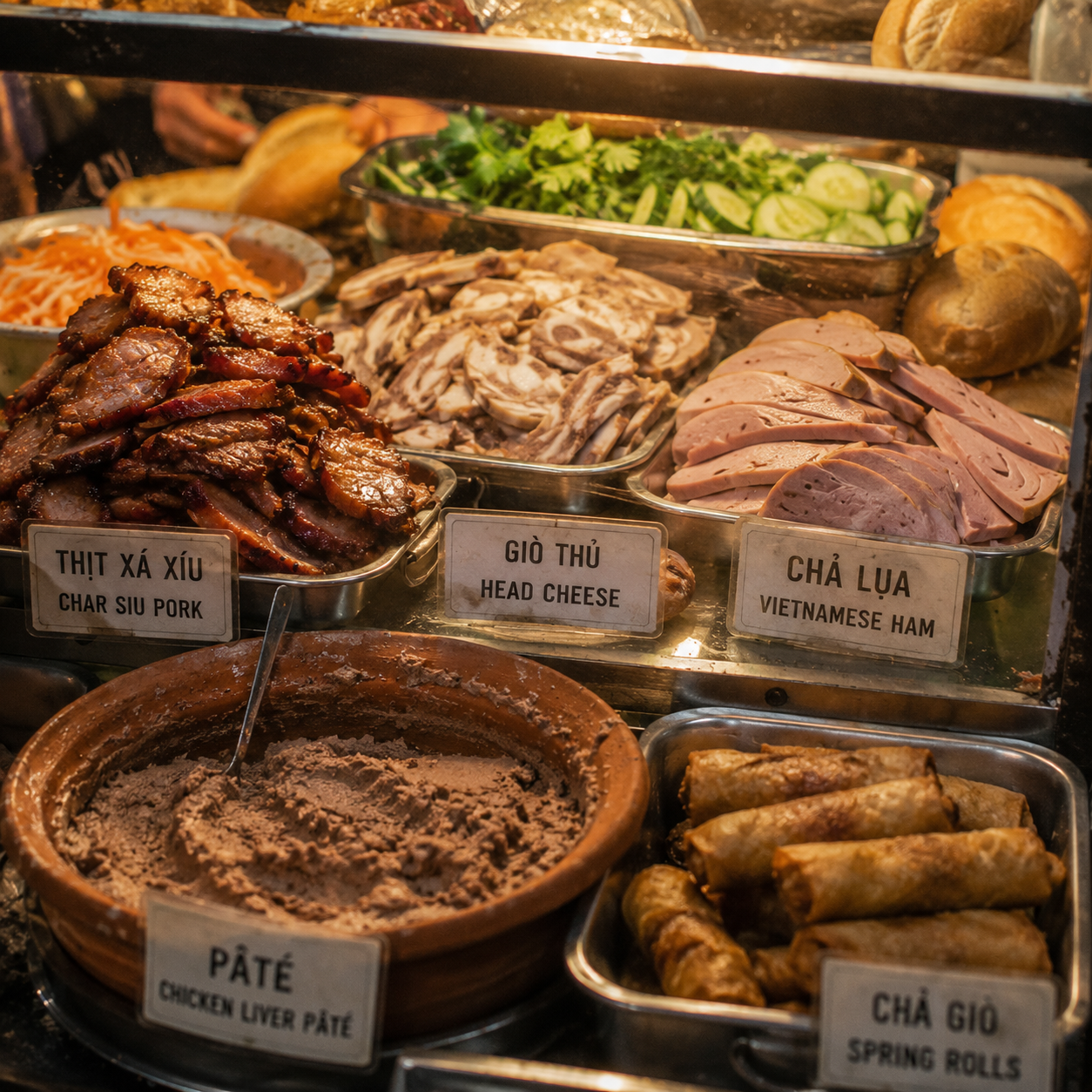
Hội An has a famous bánh mì shop called Bánh Mì Phượng, which Anthony Bourdain visited in 2009 on No Reservations (S5E10), calling it "a symphony in a sandwich." The queue now goes around the block. It's still worth it.
What makes Bánh Mì Phượng extraordinary isn't a secret recipe. It's the fact that they have been doing the same thing, to the same standard, every single day, for decades. The pâté is house-made. The bread is fresh. The pickles are their own. The herbs come in that morning.
The lesson isn't the recipe. The lesson is the commitment. Consistency, day after day, is the actual skill. Anyone can make a great bánh mì once. Doing it at 6am, correctly, every morning for thirty years. That's something different entirely.
Saigon at 7am: The Unofficial Bánh Mì Education
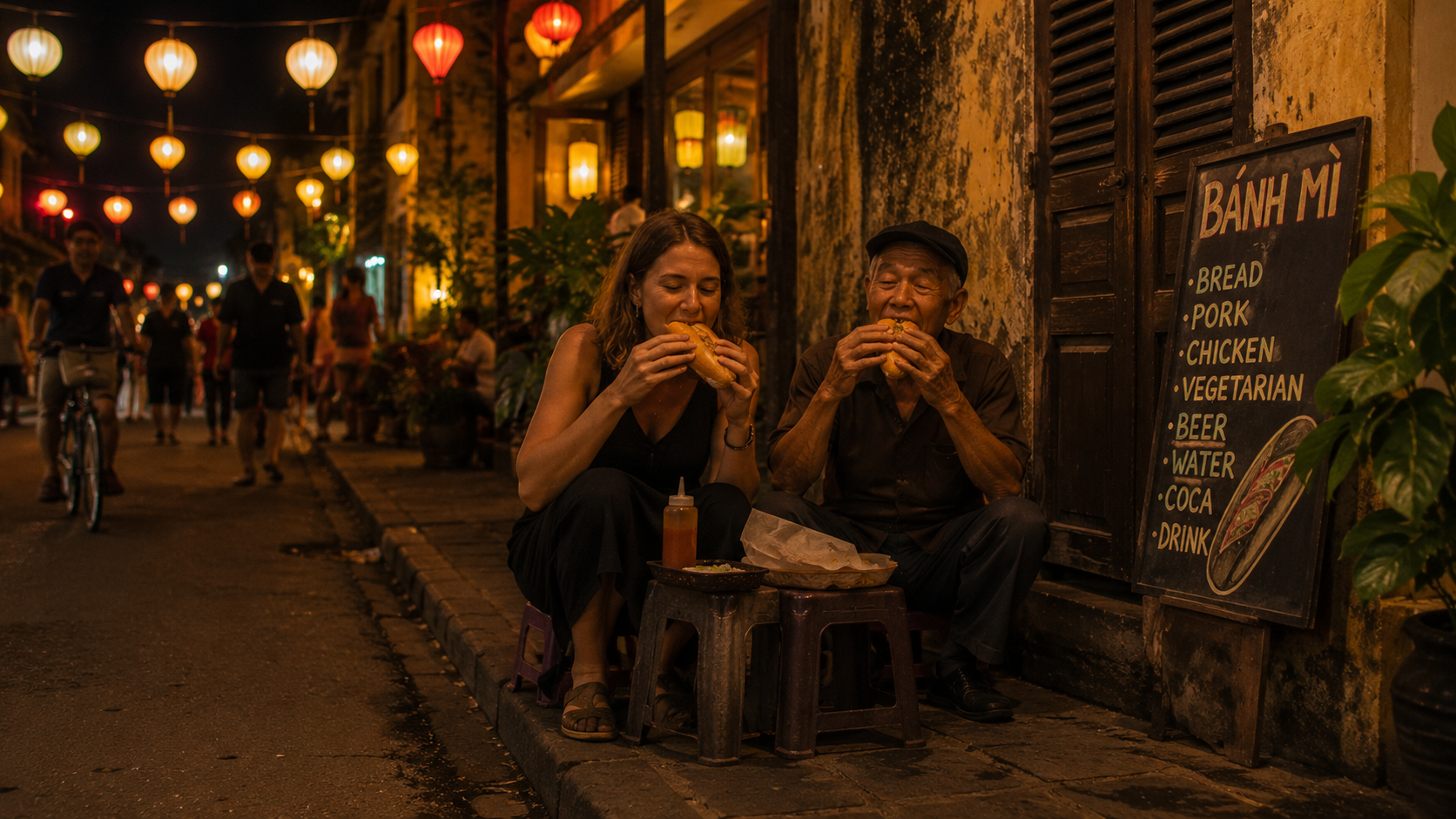
Our real education happened in Ho Chi Minh City, eating bánh mì for breakfast every day for two weeks across as many different carts and shops as we could find. Some observations:
Every cart has a specialty. Some are pâté-heavy. Some pile on the char siu. Some do a version with fried egg and butter (Trứng Ốp La) that will destroy your morning in the best possible way. None of them apologise for any of it.
The bread window is short and non-negotiable. We watched one vendor turn away a customer who arrived at 9am because the bread from that morning was already past its window. She pointed down the street. She wasn't rude about it. It just wasn't something she was willing to do. A soggy bánh mì is a tragedy she would not serve. We wrote that down and didn't let go of it.
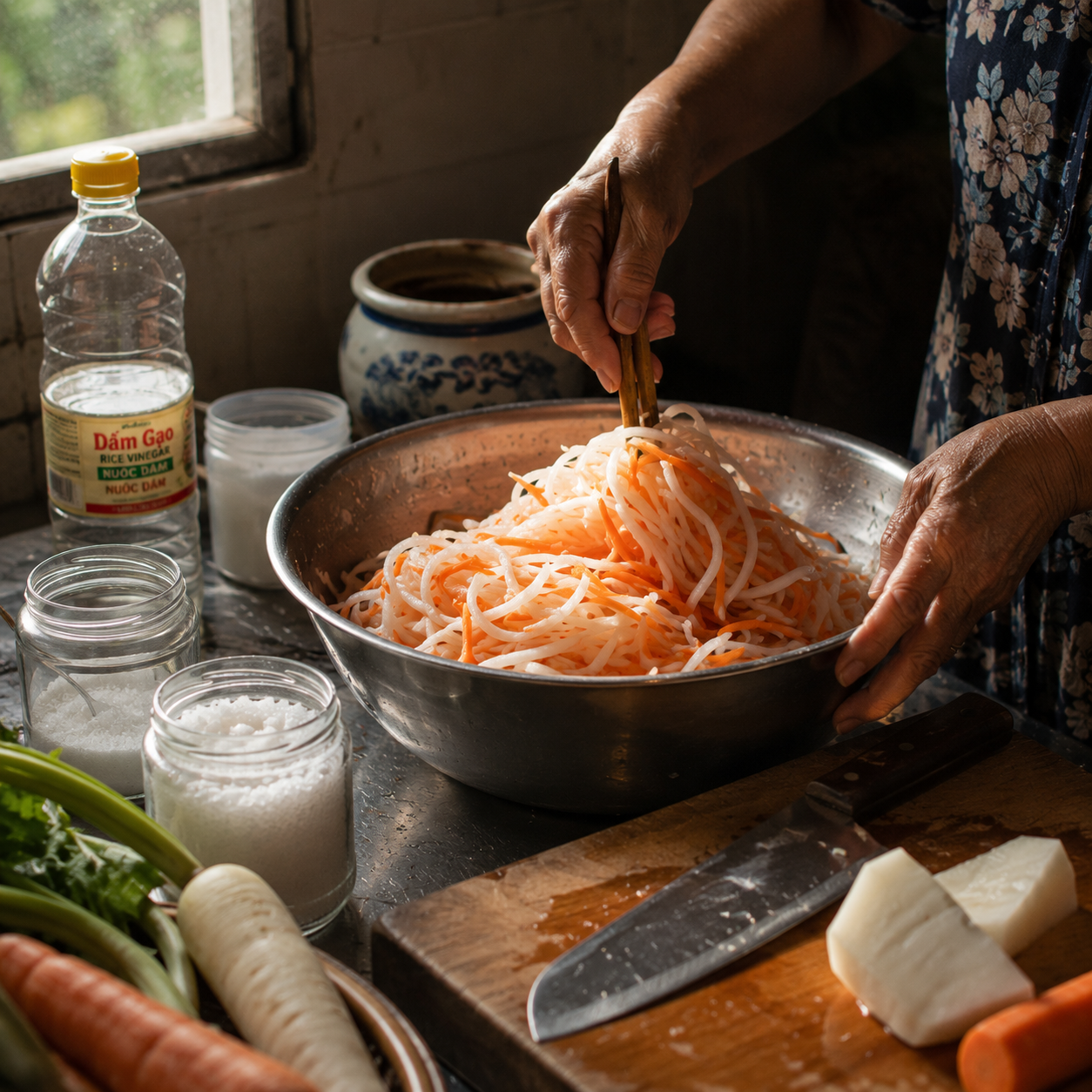
The do chua is the secret weapon. Pickled daikon (radish) and carrot, made the night before, sometimes that morning for a second batch. The brightness and acidity of properly made do chua does something to the rest of the sandwich that nothing else can replicate. Here's exactly how it's made if you want to try it yourself. We have watched people try to substitute it with coleslaw, with pickled red onion, with other things. We will not discuss what happened.
The One Thing That Changed Everything
On our last morning in Saigon, we found a cart that had been in the same spot since 1987. The woman running it had taken it over from her mother. The recipe hadn't changed. The price was the equivalent of $1.80.
It hit all five flavours in the first bite. Umami from the pâté. Salt from the char siu. Sour from the do chua. Sweet from the glaze. Heat from the fresh chilli tucked in at the end. The bread crackled when she handed it to us.
We ate it standing up. We didn't speak for a while. Then one of us said: "We should open a shop."
And that is, more or less, how Bánh Mì Shop started.
Why We're Bringing It to Sydney
Sydney has incredible Vietnamese food. We are not here to replace or compete with the community thatbuilt this food. We're here because we fell in love with what they built, we've spent years studying it properly, and we believe Sydney deserves a shop that honours the original rather than approximating it.
No fusion. No brisket. No "bánh mì bowl." Just the real thing, made correctly, every morning, in a city that's been ready for it for years.
We saw what a bánh mì can be at its best. We're not willing to make anything less.
While You're Here
The StoryWhat is bánh mì, really? The full history from colonial Saigon to Sydney. Sydney GuideHow to spot a great bánh mì in Sydney (and the five signs you should walk away). RecipeThe full bánh mì recipe. Including do chua. Including pâté. No shortcuts.Coming to Sydney Soon
We went to Vietnam. We did the research. Now we're building the shop. Follow along.
Back to Home More StoriesSources: Wikipedia: Bánh mì · Wikipedia: Bánh Mì Phượng · Geneva Accords, 1954 to 1955 · Andrea Nguyen, The Banh Mi Handbook (2014)