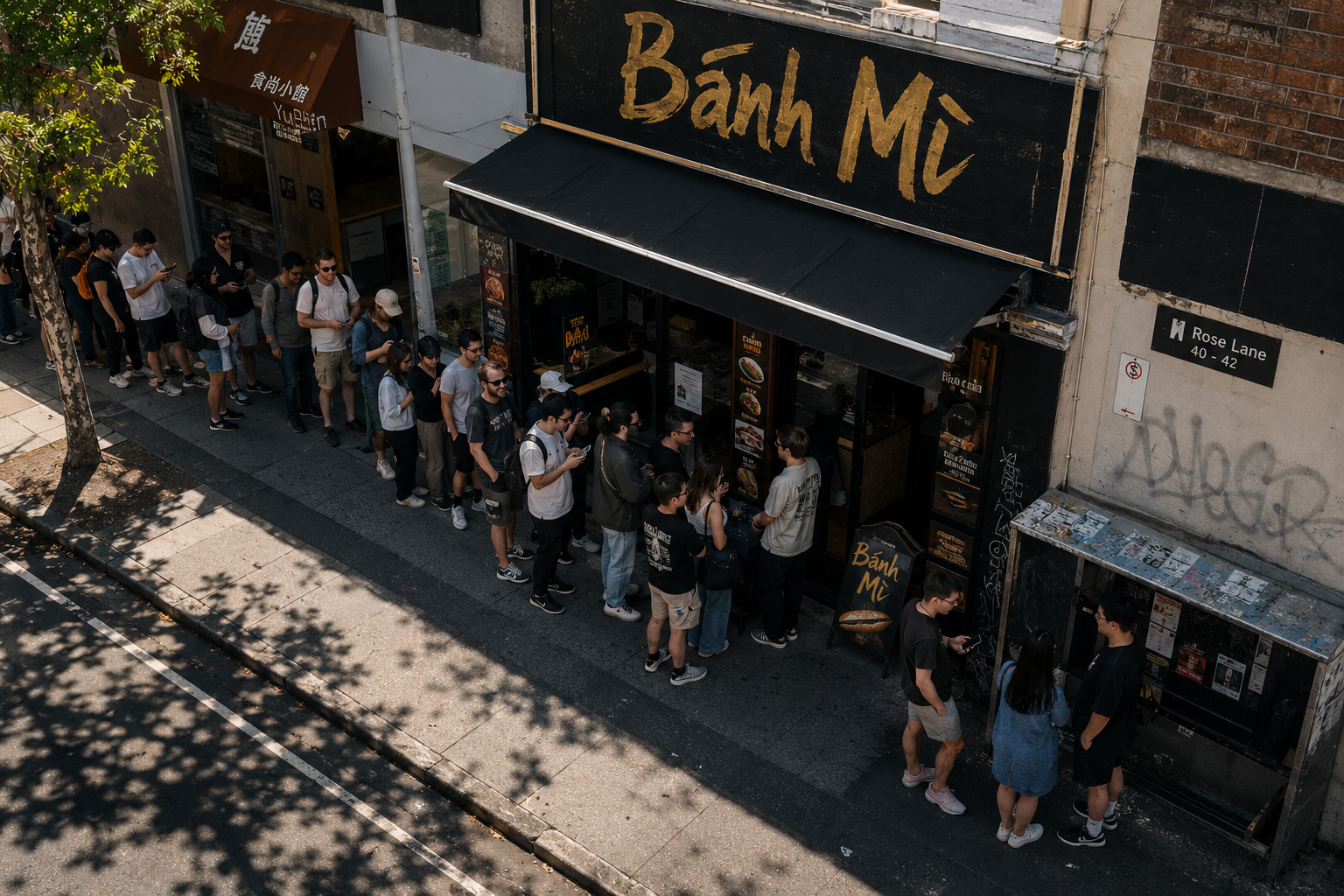
Sydney has a bánh mì problem. Not a shortage. We are absolutely drowning in them. The problem is that somewhere between $5 and $18, between Cabramatta and Newtown, between the great and the absolutely terrible, it's hard to know what you're getting.
We've eaten our way through a lot of them. Professionally. Obsessively. With the kind of dedication that our families found concerning. Here's what we learned. (For the full story of what bánh mì actually is before we get into Sydney specifics, start here.)
The Five Signs You're About to Eat a Great Bánh Mì
- The bread sounds like it means it. Press lightly on the crust. If it crackles (you should hear it), you're in good hands. If it just dents silently, walk away. The crust is non-negotiable. It has one job and that job is crunch.
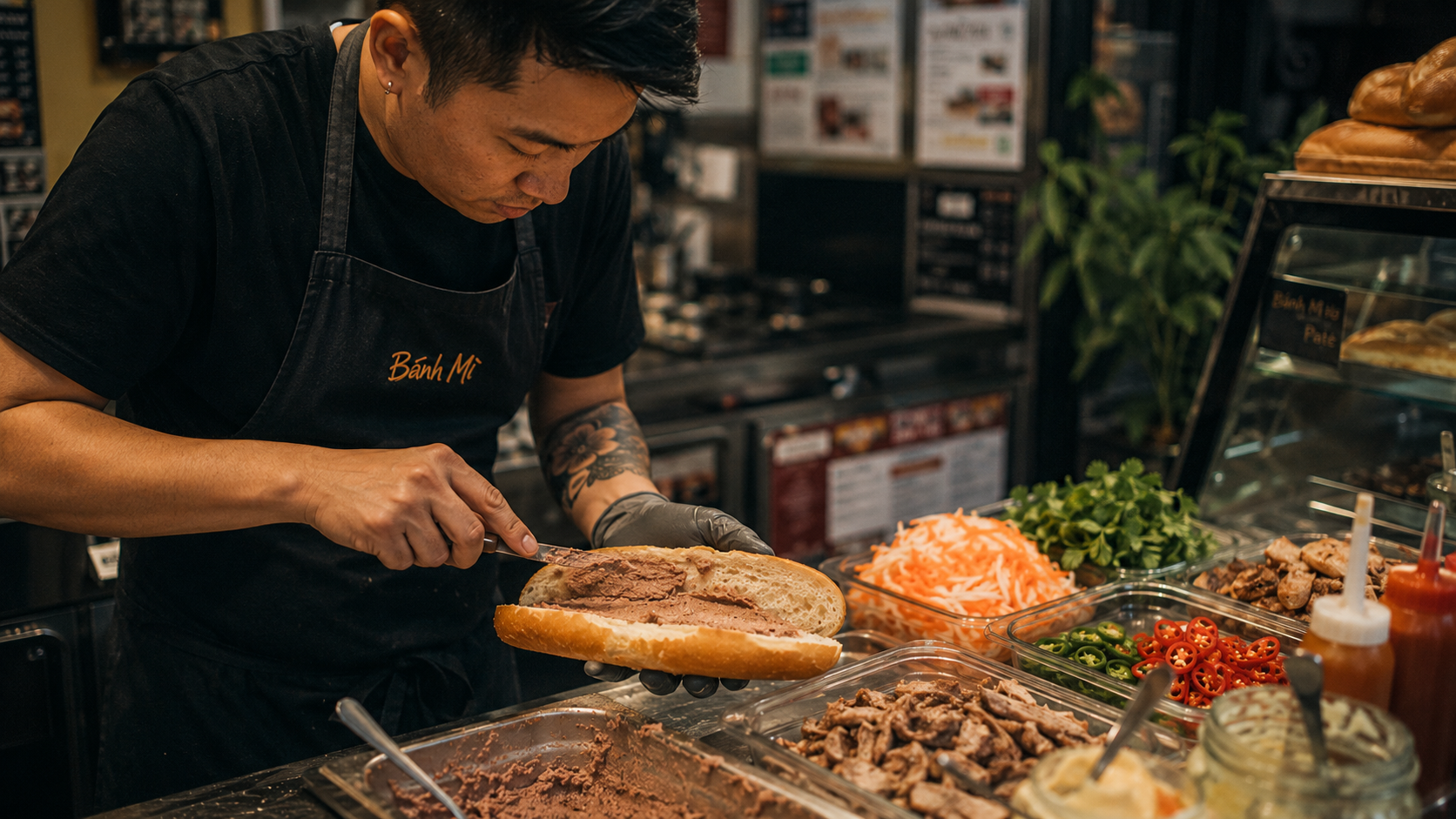
- You can see the pâté. Not a smear. Not a suggestion. A genuine, visible layer of pork liver pâté spread across the entire inside of the bread. If they're being stingy with the pâté, they're being stingy with everything.
- The pickles are house-made and bright. Pickled daikon (also known as radish) and carrot (do chua) should be sharp, bright, and acidic enough to make you flinch slightly. Do chua needs at least 24 hours to develop properly. It is never, ever a same-day thing. If they're pale, soft, and lack crunch, someone rushed them or over-seasoned them into submission. Either way, not good.
- The herbs are fresh. Fresh coriander (not wilted), fresh spring onion, fresh cucumber. This is the difference between a bánh mì that sings and one that just... sits there breathing through its mouth.
- It takes them more than 20 seconds to make it. A great bánh mì is assembled with intention, not just stuffed and wrapped. If it happens in under 20 seconds, someone somewhere cut corners.
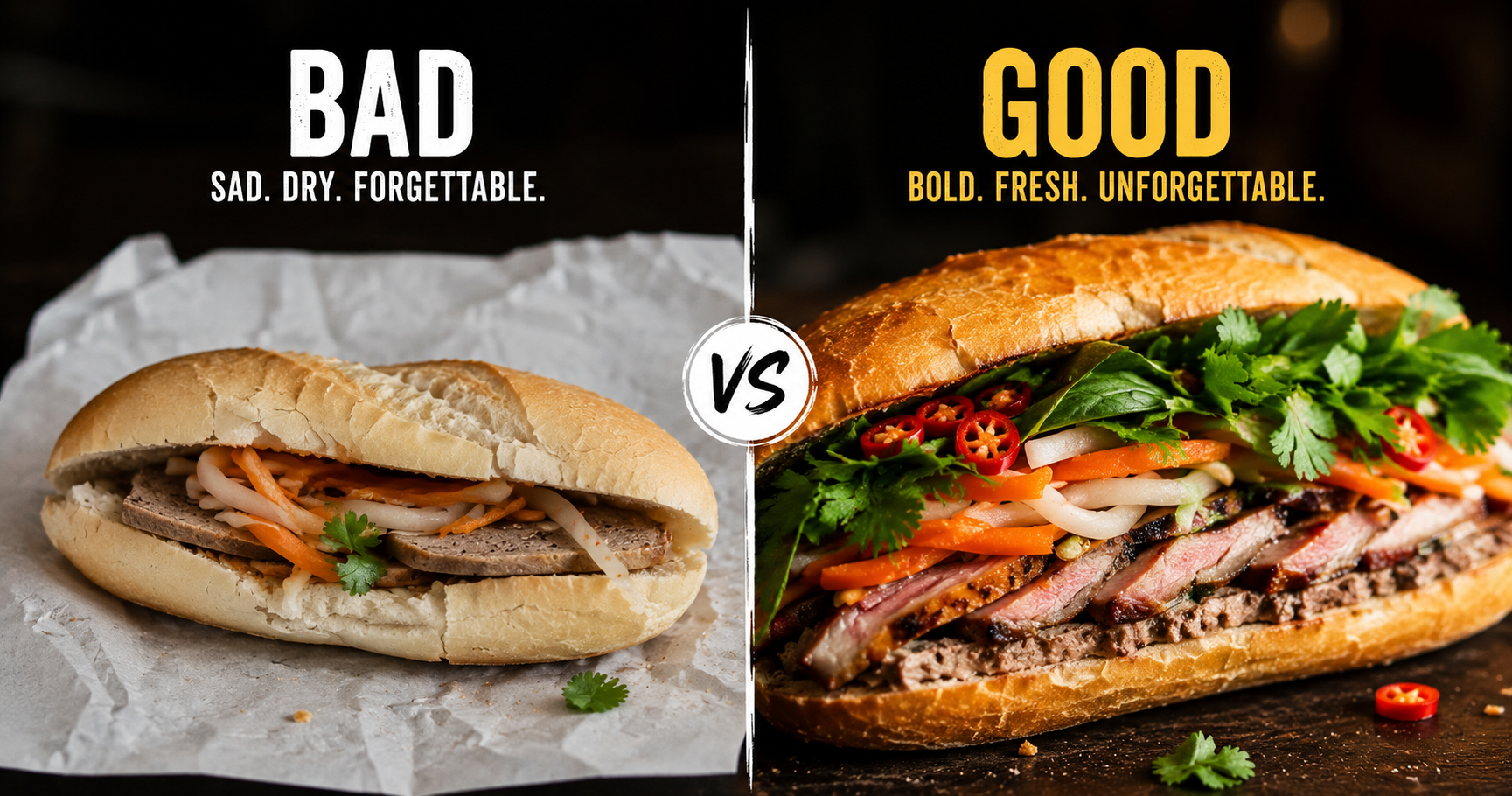
The Five Signs You Should've Kept Walking
- The bread is soft before you touch it. Soft bread means it was baked hours ago, or yesterday, or arrived in a delivery truck that morning. That crust needs to be baked fresh and eaten fast. No exceptions. A bánh mì with a soft crust is a sandwich having an identity crisis.
- There's mayonnaise instead of pâté. Regular mayo is not a substitute for pâté. It's a different sandwich. A worse sandwich. Pâté is what makes it umami-rich and complex. Mayo is just fat in a jar that took no effort and knows it.
- The pickles came out of a jar. You can tell. They're uniform, pale, soft, and taste of nothing but vinegar and sadness. Proper do chua is hand-cut, pickled with sugar and salt, and rested overnight at minimum. Here's exactly how it should be made. If what you're looking at doesn't match that, someone cut a corner you're now eating.
- No fresh herbs. If there's no coriander, no spring onion, no fresh anything, what you're holding is a cold meat roll. Not a bánh mì. A bánh mì without herbs is like a band without a bassist. Technically still music but something is very wrong.
- It cost you $6. Look. We love a deal. But a proper bánh mì with house-made pâté, fresh bread baked that morning, and real pickles cannot physically cost $6. Something is being skipped. You just don't know what yet.
Why Sydney Is the Best City in Australia for Bánh Mì
This is not a controversial statement. Sydney's Vietnamese community, spread across Cabramatta, Marrickville, Bankstown, and Fairfield, has been making bánh mì the right way for decades. These are families who brought the recipes from Vietnam, refined them for 30-plus years, and built entire suburbs around them.
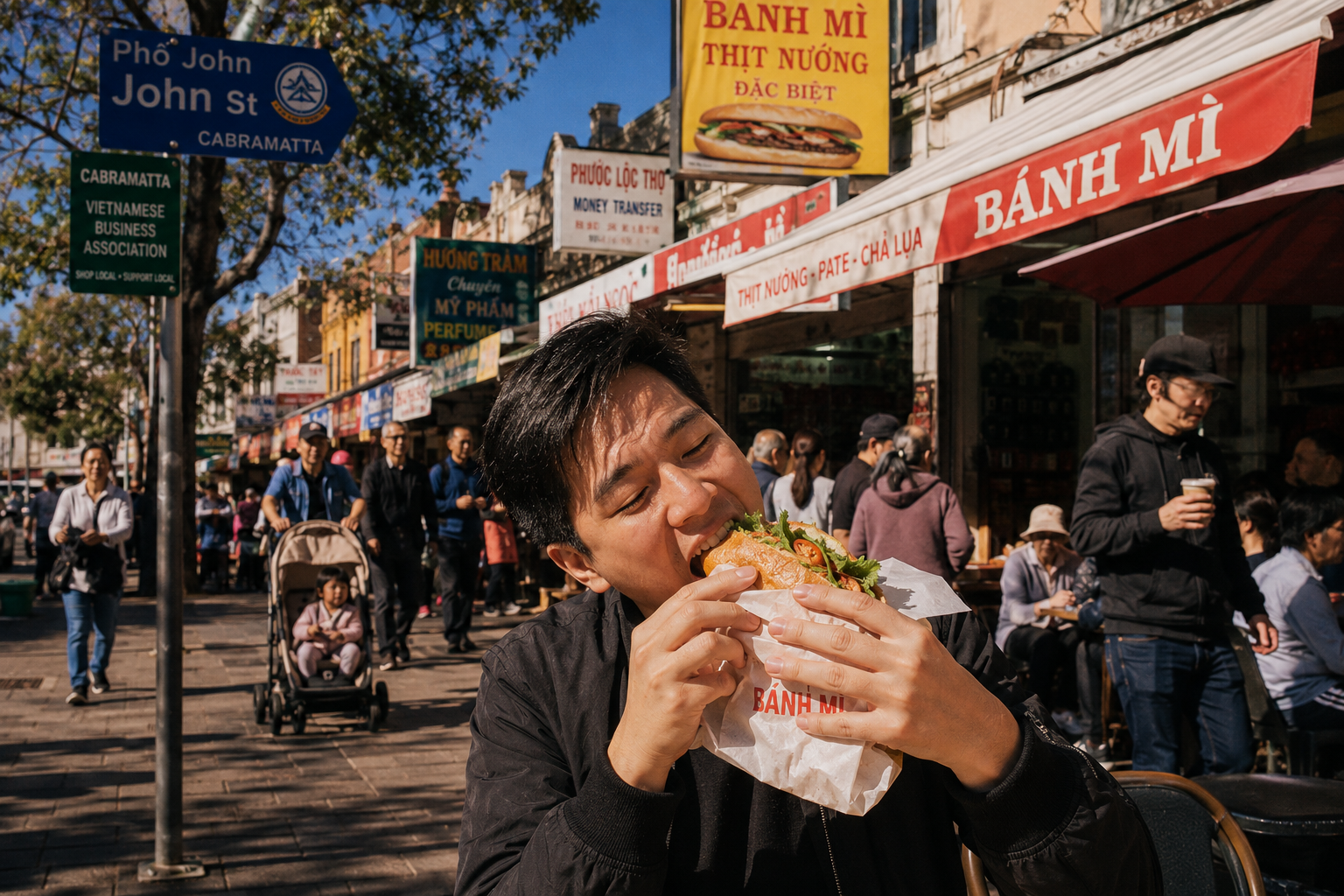
Cabramatta, in particular, is a bánh mì pilgrimage site. If you've never made the trip on a Saturday morning specifically to eat bánh mì and then wander through John Street, add it to your list immediately. You'll go for the sandwich and stay for three hours because everything else is also incredible.
"Sydney didn't discover bánh mì recently. The Vietnamese community here has been doing it properly for longer than most of us have been alive."
What Sydney Gets Right (And What It's Still Getting Wrong)
Sydney's best bánh mì shops are the real deal. The bread, the pâté, the do chua. When it's done right here, it stands with anything you'd find in Ho Chi Minh City. We've eaten both extensively. We're qualified to say this.
What Sydney sometimes gets wrong is the trend-ification of bánh mì. The fusion versions with sriracha aioli and brisket and "pickled daikon slaw." Look, we're not against creativity. But when the innovation strips away the pâté, the do chua, and the fresh herbs in favour of something technically edible but spiritually broken, we have concerns. Call it fusion if you want. We'll call it missing the point.
The standard is not complicated. It's just a commitment most people aren't willing to make every single day.
We are.
While You're Here
The StoryWhat is bánh mì, really? The full history from Saigon to Sydney. TravelWe ate bánh mì every day in Vietnam. Here's what happened and why we came home and started a shop. RecipeThe full bánh mì recipe. Do chua, pâté, char siu, assembly. Make it once. You'll understand.Sydney's Bánh Mì Shop Is Coming
House-made pâté. Fresh bread baked in small batches. Do chua made the night before. We're almost ready.
Back to Home More StoriesSources: Wikipedia: Bánh mì · Cabramatta Food Trail, NSW Government · Andrea Nguyen, The Banh Mi Handbook (2014)