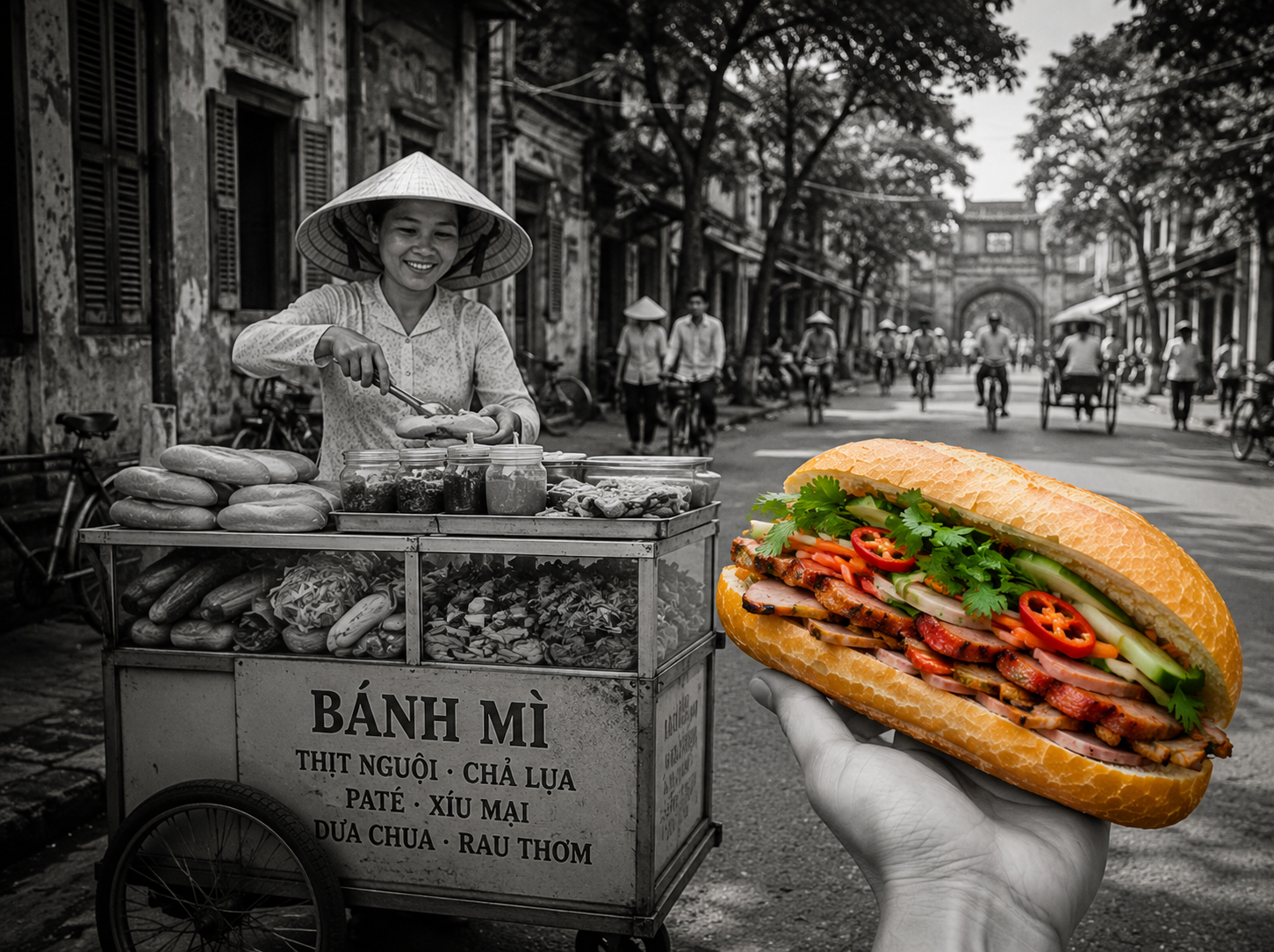
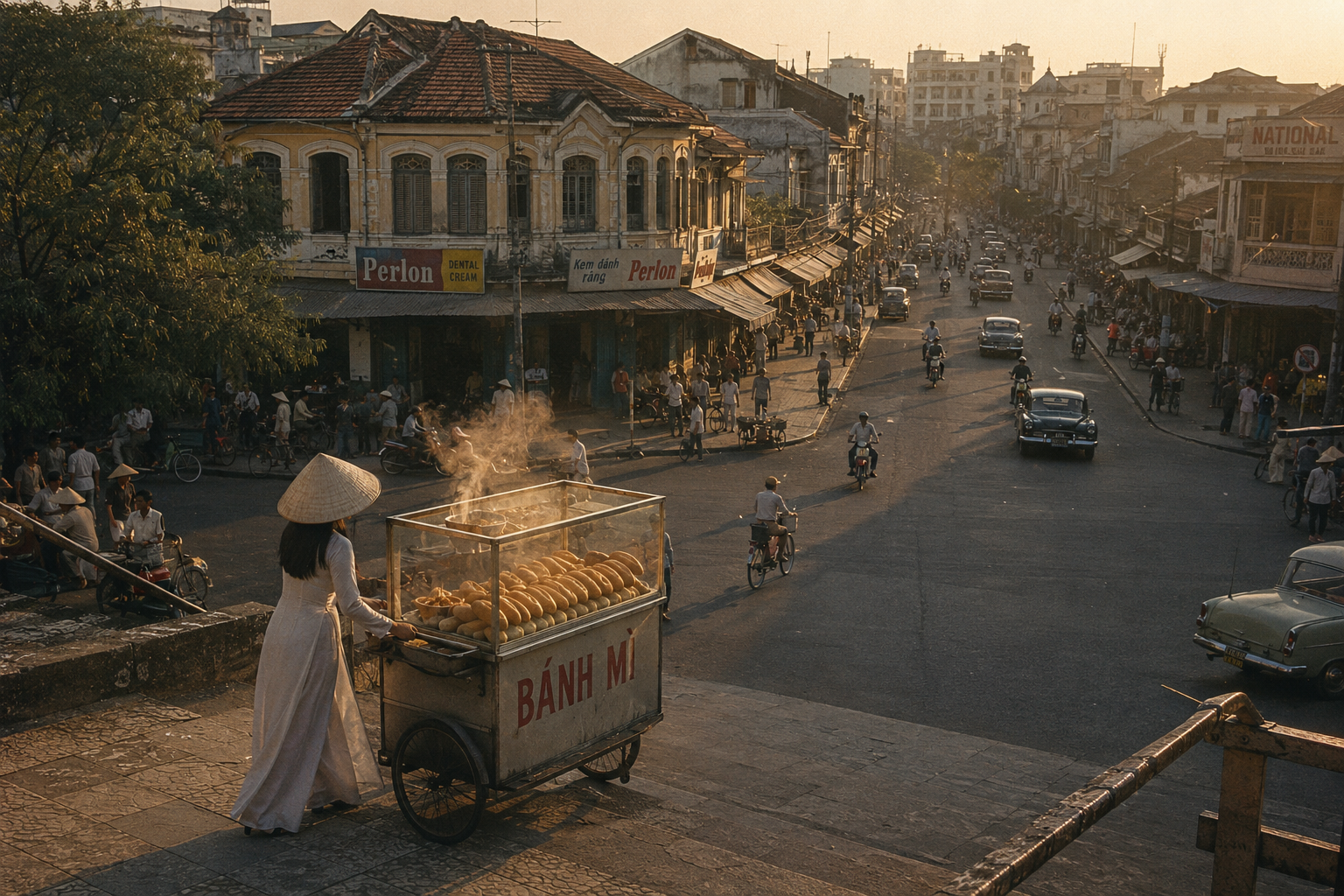
Let's get one thing straight: bánh mì is not a Vietnamese take on a French sandwich. It is a Vietnamese sandwich that happens to use bread the French left behind. There's a difference. A big one.
The French arrived in Saigon in 1859 with their baguettes, their café au lait, and the kind of cultural arrogance that assumed everyone else would eventually catch up. The Vietnamese took the baguette, looked at it, and thought: we can do better. They were right.
Step One: Reinvent the Bread
Wheat doesn't love tropical heat. In Vietnam's humidity, a pure wheat loaf turns dense and chewy fast. So Vietnamese bakers started swapping some wheat for rice flour. And in doing so, accidentally created something extraordinary.
The result was a baguette with a paper-thin crust that crackled like glass, and a crumb so feather-light it almost dissolved on your tongue. It stopped being a French baguette the moment Vietnamese hands touched the dough. It became something entirely new.
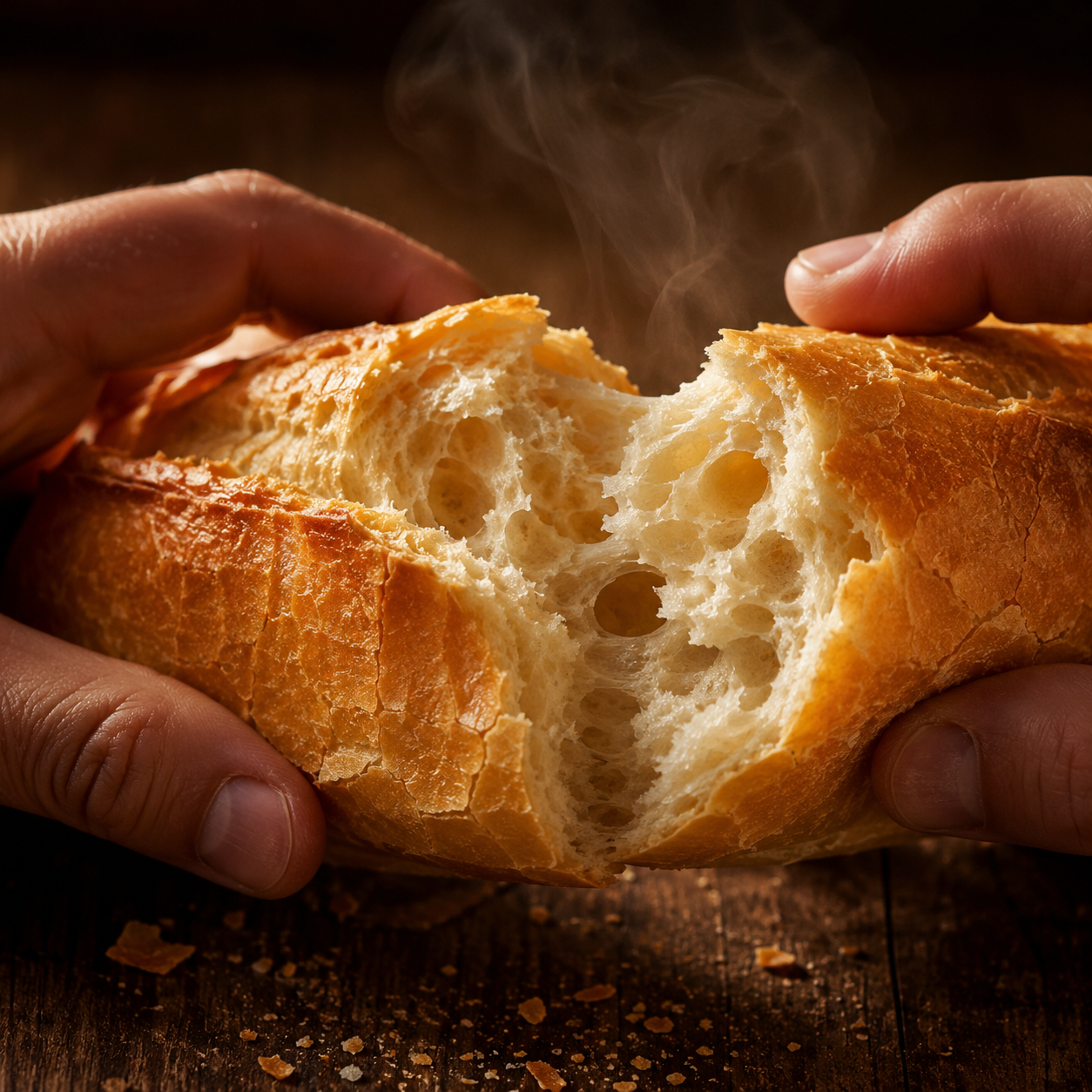
🥖 Fun fact: The Vietnamese originally called the French baguette bánh tây, meaning "Western cake." They had no strong feelings about it until they made it their own. Then they named it bánh mì (just bread) and gave it the only name it ever needed.
Step Two: The Filling That Changed Everything
Then came 1954, and everything changed. Not just for bánh mì. For all of Vietnam.
The Geneva Accords split the country at the 17th Parallel. Nearly one million people fled from North Vietnam to Saigon in a matter of months. They carried almost nothing. But they carried their recipes. Northern flavours (rich pâté, cured meats, pickled vegetables) collided with the Southern love of fresh herbs, chilli, and bold heat.
"Someone stuffed it all into a baguette and sold it from a cart. That cart changed everything."
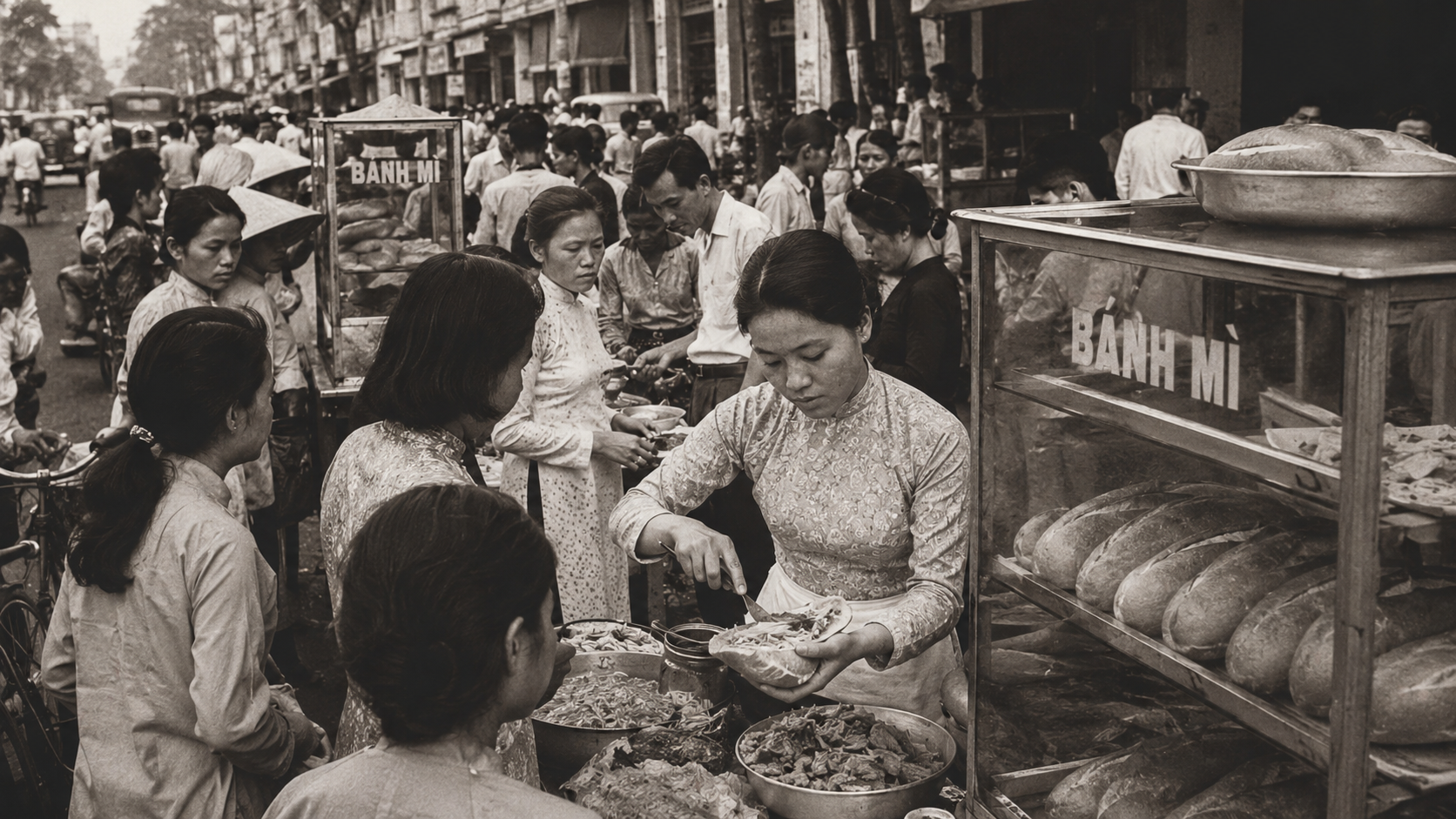
In 1958, Lê Minh Ngọc and Nguyễn Thị Tịnh opened Hòa Mã in Saigon. The city's first dedicated bánh mì shop. The recipe they perfected there became the blueprint every vendor that followed built on. If you've ever eaten a great bánh mì, you've eaten something that traces back to that kitchen.
What Actually Goes In a Bánh Mì?
This is where people get confused. Usually because they've only ever had a bad one. A proper bánh mì is not just a roll with some cold cuts and a squeeze of sriracha. It is a precision-engineered flavour machine built around five simultaneous taste notes:
Umami. From the pâté. Pork liver and pork meat, slow-cooked with aromatics, spread thick across the inside of the bread. Don't skip it. Don't reduce it. Spread it thick. Always.
Salt. From the cured meats. Char siu pork (barbecue-glazed, caramelised at the edges), head cheese, or both if you're ordering the đặc biệt.
Sour. From the do chua. Pickled daikon and carrot (also known as radish), made at least 24 hours ahead. This is the acid that cuts through the fat and makes everything sing. If you want to make your own, here's how.
Sweet. Also from the do chua, and from the natural sweetness of the char siu glaze.
Heat. Fresh chilli, sliced thin, tucked in last.
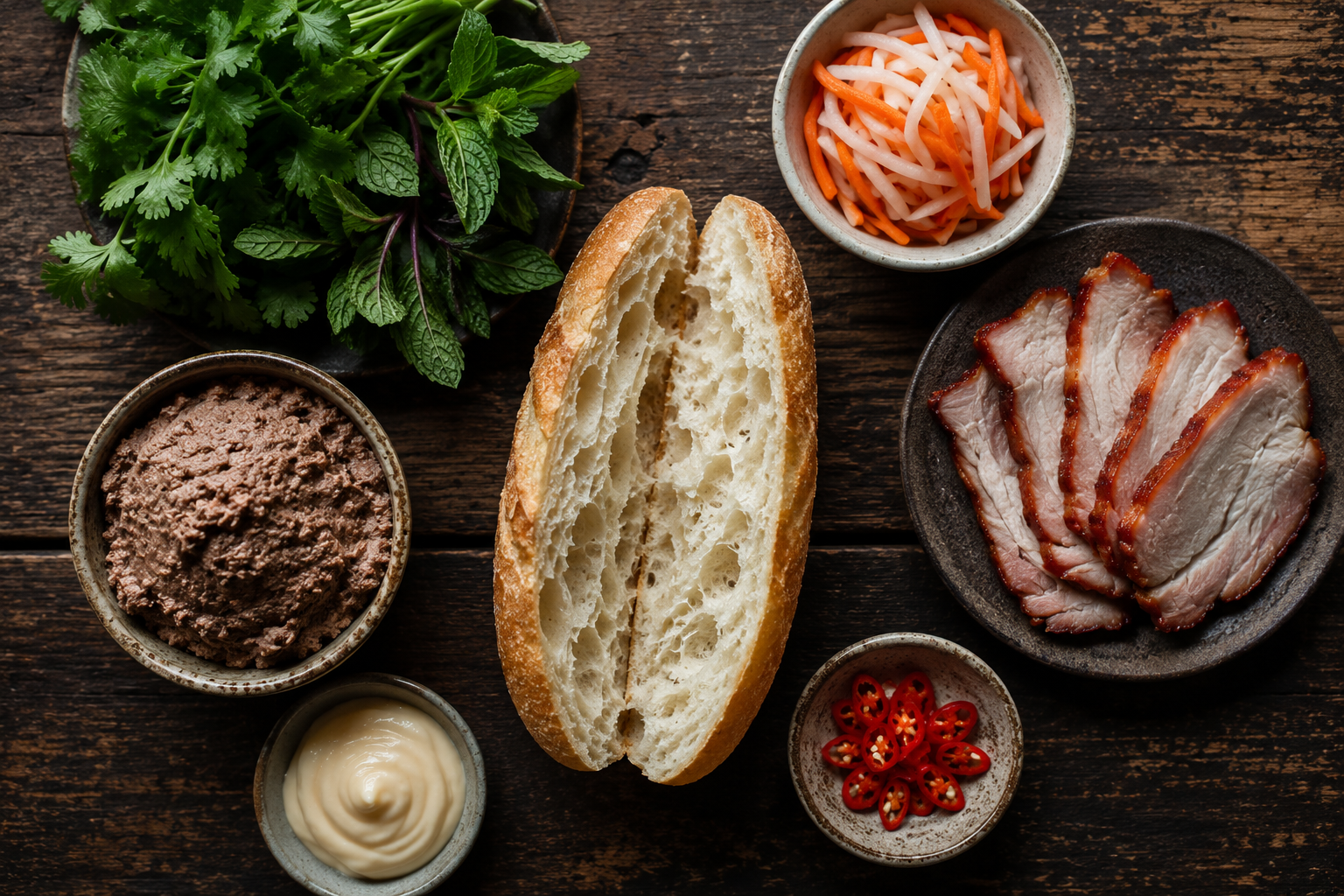
Wedged in with all of this: fresh coriander, cucumber slices, and spring onion. The herbs aren't a garnish. They are structural. They bring freshness that cuts the richness of the pâté and lifts the whole thing just before it would become too heavy.
No other sandwich hits all five flavour notes in every bite. That is not an accident. That is a hundred years of street-level craft.
The Word the World Finally Learned
In 2011, "bánh mì" entered the Oxford English Dictionary. A food born on a Saigon street cart in 1954 had become a word the entire English-speaking world now needed. That's not a niche food trend. That's cultural dominance.
📖 OED definition (2011): "bánh mì (n.): A Vietnamese sandwich consisting of a baguette filled with a variety of ingredients including meat or fish, pickled vegetables, and fresh herbs." Pretty accurate. Though "a variety of ingredients" undersells it like calling the Sydney Opera House "a building."
So Why Isn't Every Bánh Mì Great?
Because the details are unforgiving. The bread has to be baked fresh and eaten within the hour. After that the crust softens and the whole thing loses its reason for existing. The pâté has to be house-made and spread generously. The pickles need time. The herbs need to be fresh that morning.
Shortcuts ruin bánh mì. Every single one of them. The difference between a great bánh mì and a mediocre one isn't the recipe. It's the commitment to doing every step properly, every time.
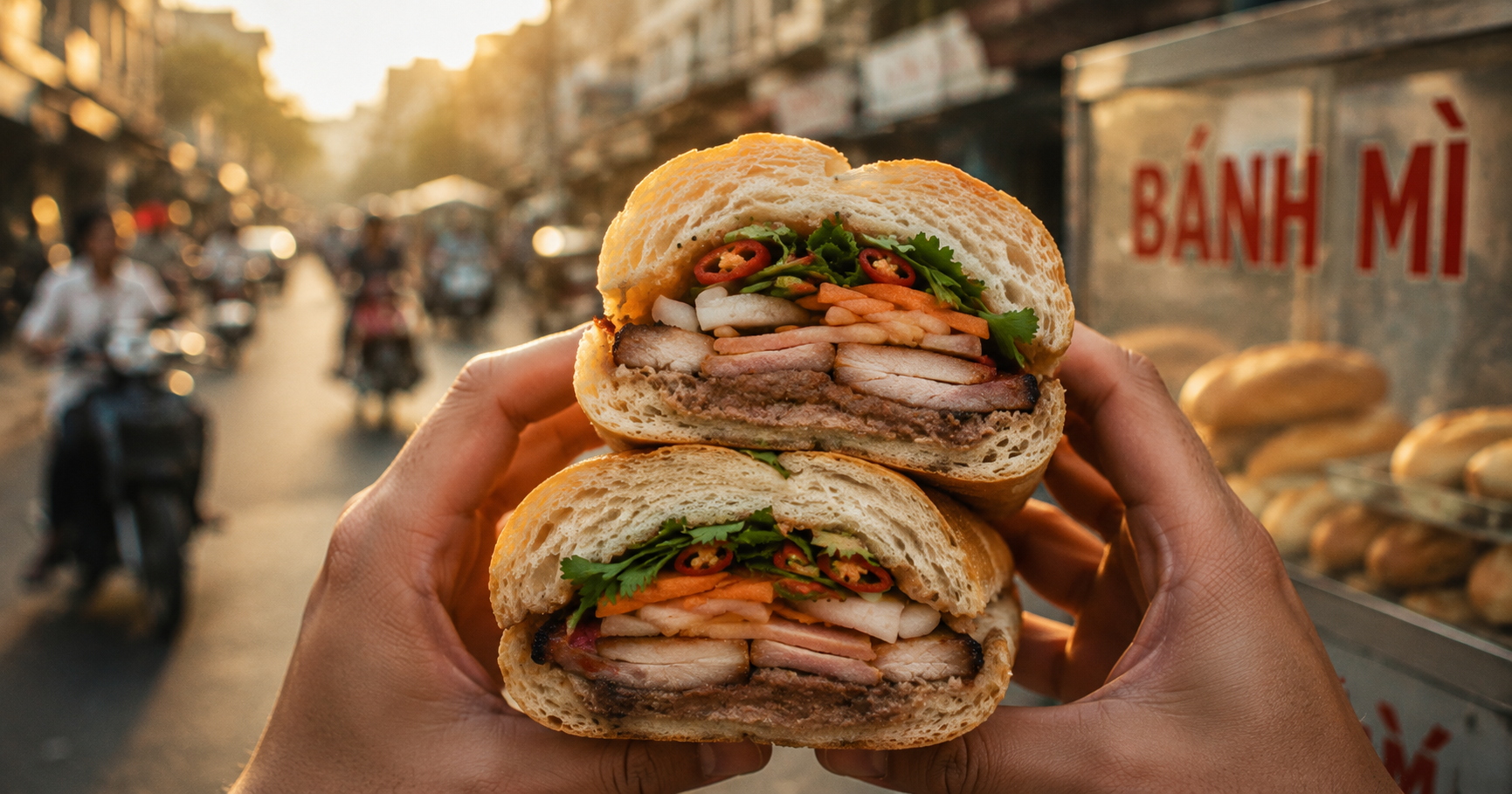
That's what we're building at Bánh Mì Shop. No shortcuts. No compromises. Bread baked in small batches all day. House-made pâté. Pickles made the night before. Herbs that came in that morning.
A bánh mì that tastes like the street carts of Saigon. Made in Sydney, for Sydney, by people who've eaten enough bad sandwiches to know exactly what a great one should taste like.
While You're Here
Sydney GuideHow to spot a great bánh mì in Sydney (and when to turn around and walk away) TravelWe ate bánh mì every day in Vietnam. Here's the story of why we came home and started a shop. RecipeThe full bánh mì recipe. Everything from do chua to pâté. Make it once. You'll understand.We're Opening Soon in Sydney
No shortcuts. No compromises. House-made everything. Follow along while we build it properly.
Back to Home More StoriesSources: Wikipedia: Bánh mì · Oxford English Dictionary, 2011 entry · Hòa Mã, Saigon, est. 1958 · Geneva Accords, 1954 · Andrea Nguyen, The Banh Mi Handbook (2014)